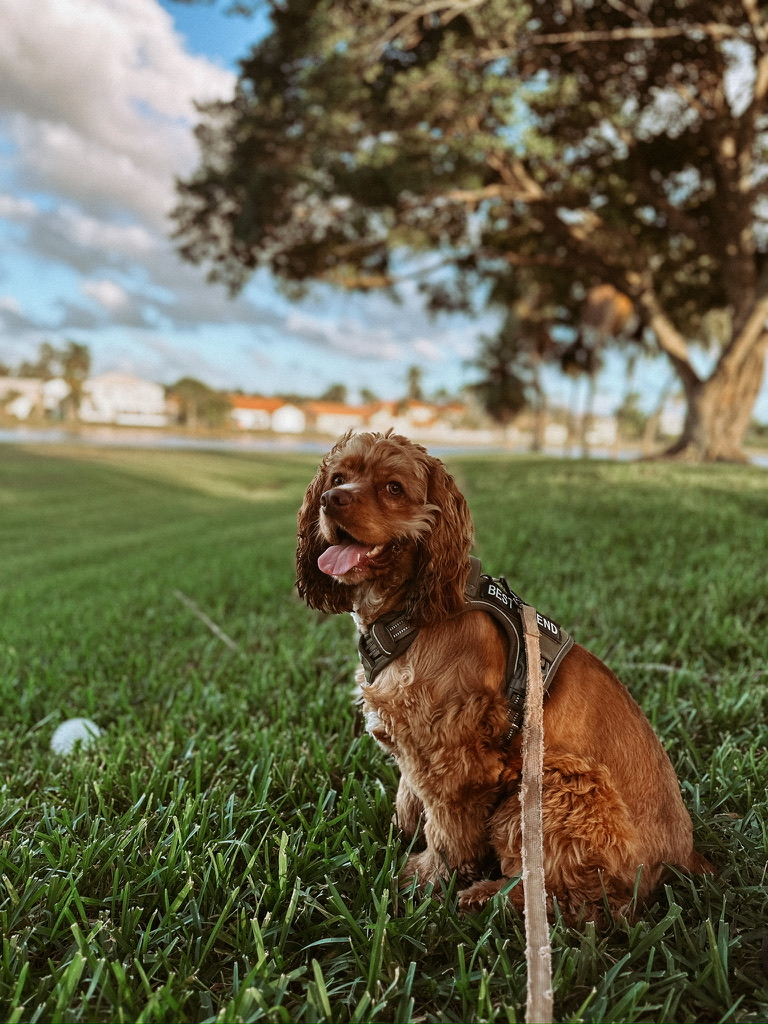

When we brought Diego home, I was convinced the hardest part would be teaching him to sit, stay, and maybe even roll over.
I couldn’t have been more wrong.
 I remember thinking back to my old college buddy, Titan, my American Bulldog. I could clearly picture the excitement of bringing him home, but somehow I had forgotten almost all the small little details that came after those first few days.
Diego was completely different. It wasn’t the training that caught me off guard. It was everything else. The amount of planning, patience, routine, and problem solving that goes into raising a happy, energetic, and incredibly clingy English Cocker Spaniel completely surprised me.
Looking back now, there are several things I wish someone had told me before bringing home an 8 week old little Cocker.
If you’re getting ready to welcome your first dog into the family, or it’s simply been a long time since you’ve raised a puppy, here are five lessons that would have saved me a lot of stress.
I put this one first because I think it’s the most important lesson on this list.
Most of us aren’t professional dog trainers. We don’t have endless hours in the day, unlimited budgets, or the ability to take our dogs on exciting adventures every single weekend.
But we can do a little, consistently. And by consistently, I mean every day.
A walk around the neighborhood. A quick grooming session. Fifteen or twenty minutes of training. A game of fetch after work. Those small moments matter far more than trying to be the “perfect” dog owner once in a while.
Diego reminds me of this every day. As soon as he sees me, he’s ready to play. He’ll grab a squeaky piggy, bounce around the house, and make it very clear that it’s time for an adventure. The funny thing is, he’s not asking me to spend the next three hours throwing a ball. He just wants my attention. Most days, about 30 minutes of focused play is enough to burn off his energy and leave him happy. And if you can manage to fit another session in there then even better.

Looking back, I realized it was never about doing more. It was about showing up consistently. Those daily moments may not seem like much, but over weeks, months, and years, they become the foundation of a happy, healthy relationship with your dog.
This lesson builds on the first one because the things we do with our dogs each day create a routine that’s far more valuable than any expensive toy or gadget.
As a busy working professional and the dad of a 7-month-old daughter, my days are often long and exhausting. There are plenty of evenings when I realize I haven’t spent as much quality time with Diego as I wanted to, and I’ll admit that the dog dad guilt is real.
Over time, I’ve realized Diego isn’t keeping score of how much money I spend on him. He’s paying attention to whether I’m present.
Don’t get me wrong. There’s nothing wrong with automatic ball launchers, puzzle toys, or other gadgets. Many dogs absolutely love them. But if Diego could talk, I honestly think he’d tell me he’d rather I be the one throwing the ball, leading the walk, or sitting on the floor playing with him.
The best investment I’ve made hasn’t been a product. It’s been building a routine where Diego knows he’ll get my undivided attention every single day, even if it’s only for a little while.
Before Diego, I thought the best way to tire out a dog was simple. Go for a long walk or throw a ball until they were exhausted.
While physical exercise is important, I’ve learned that sometimes it isn’t enough. Some days Diego can play fetch for what feels like forever and still be ready for more. That’s when mental exercise does the trick.
Dogs were bred to use their minds. Whether it was hunting, herding, retrieving, or tracking, many breeds are happiest when they have a purpose. Even simple brain games can tap into those natural instincts.
One thing I’ve discovered is that Diego’s natural instincts as an English Cocker Spaniel are very much alive. He loves solving problems. Whether it’s opening a box to find treats, playing hide and seek with his favorite toy, or learning a new command so I’ll throw his ball, he genuinely enjoys the challenge. (For the record, Diego is a complete playaholic and isn’t nearly as motivated by treats as he is by a tennis ball!)
What I’ve learned is that mental stimulation doesn’t just burn energy. It gives dogs a job to do. It keeps them engaged, builds confidence, and gives them a healthy outlet for their natural instincts.
For our family, it’s become one of the best ways to help reduce Diego’s anxiety while also improving his focus and obedience. It’s especially helpful on days when we have to leave him home while we run errands or go out to dinner. A mentally fulfilled dog is often just as important as a physically tired one.
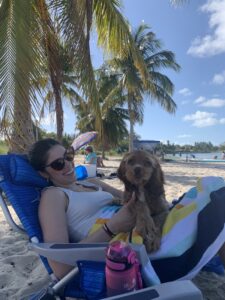
People often say that dogs have unique personalities, and I couldn’t agree more. In fact, I’d argue they wear their personalities on their sleeves. They don’t hide how they’re feeling.
The more time you spend with your dog, the easier it becomes to recognize their little cues. You’ll learn when they’re asking to go outside, when they’re anxious, when they’re excited, when they’re looking for comfort, and when they simply want to play.
One of the biggest lessons I’ve learned is that it’s our job to adapt to our dogs, not expect them to adapt to the picture we had in our heads.
What’s funny is that Diego almost wasn’t our dog.
When we first visited the breeder, we fully expected to bring home his sister. We had just landed back in Florida after a trip to San Diego, and based on the videos we’d seen, we were convinced she was the perfect puppy for our family.
She was every bit as adorable in person, but she was also incredibly independent and full of confidence.
Then her brother walked over! (hint, hint)
With a huge smile, a constantly wagging tail, and absolutely no hesitation, he walked straight over to Ashley and me looking for attention. Within just a few minutes, he had completely won us over.
That was Diego.
We hadn’t planned on bringing him home that day, but his personality made the decision for us.
Looking back, it’s amazing how one short visit completely changed our lives. We went there expecting to bring home one puppy, but we left with another. Nearly every memory we’ve made together started with that unexpected decision.
Since then, Diego has shown us so much more about who he is. He’s incredibly affectionate, endlessly playful, and happiest when he’s close to his people. We’ve learned what excites him, what makes him anxious, what motivates him, and what helps him feel safe.
Learning your dog’s personality changes the way you communicate with them. It helps you understand what motivates them, what stresses them out, and how they experience the world around them. Once you stop trying to make your dog fit your expectations and start appreciating them for who they are, your relationship becomes stronger than you ever imagined
I saved this lesson for last because I think every dog owner needs to hear it from time to time.
As humans, we’re not perfect. We’re going to make mistakes, lose patience, get frustrated, and sometimes wish we had more time or energy than we do.
There are going to be moments when you feel guilty. Maybe you snapped at your dog after a long day. Maybe you left them home longer than you wanted to. Maybe you just feel like you’re not doing enough.
I’ve felt all of those things with Diego.
But one thing I’ve learned is that dogs don’t hold grudges the way we do. They aren’t keeping score of our bad days. They’re not measuring us against some perfect standard of ownership.
They care about how we show up over time.
So instead of beating yourself up over the moments you get wrong, try to focus on what you do next. Take them for a walk. Sit with them for a few extra minutes. Try again tomorrow.
What matters most isn’t perfection. It’s effort, consistency, and love over time.
And if you’re doing your best, your dog already knows that.

When I look back on those early days with Diego, I realize I spent a lot of time worrying about doing everything right.
Right food. Right training. Right routines. Right amount of exercise. But the truth is, most of what I was stressing over didn’t matter nearly as much as I thought it did.
Diego didn’t need a perfect owner. He just needed someone who showed up for him consistently and paid attention to who he was becoming. Over time, I stopped trying to control every detail of his behavior and started focusing more on understanding him. That shift changed everything about how I experience dog ownership.
It stopped feeling like something I had to get right and started feeling like something we were figuring out together.
And honestly, that’s what I keep coming back to.